
Lincoln, NE – October 14, 2026 – PRESSADVANTAGE –
Wenzl’s Collision Center has published seasonal consumer guidance explaining how colder temperatures can change the way certain vehicle conditions are noticed after collision repair. The October resource introduces a post-repair observation framework centered on fit and closure, sealing, sound, and vehicle operation.
The guidance expands on Wenzl’s collision repair information by addressing a practical challenge that can arise when seasons change. A vehicle repaired during warmer weather may be driven under substantially colder conditions later in the year, when differences in material behavior and road conditions can make certain characteristics more noticeable.
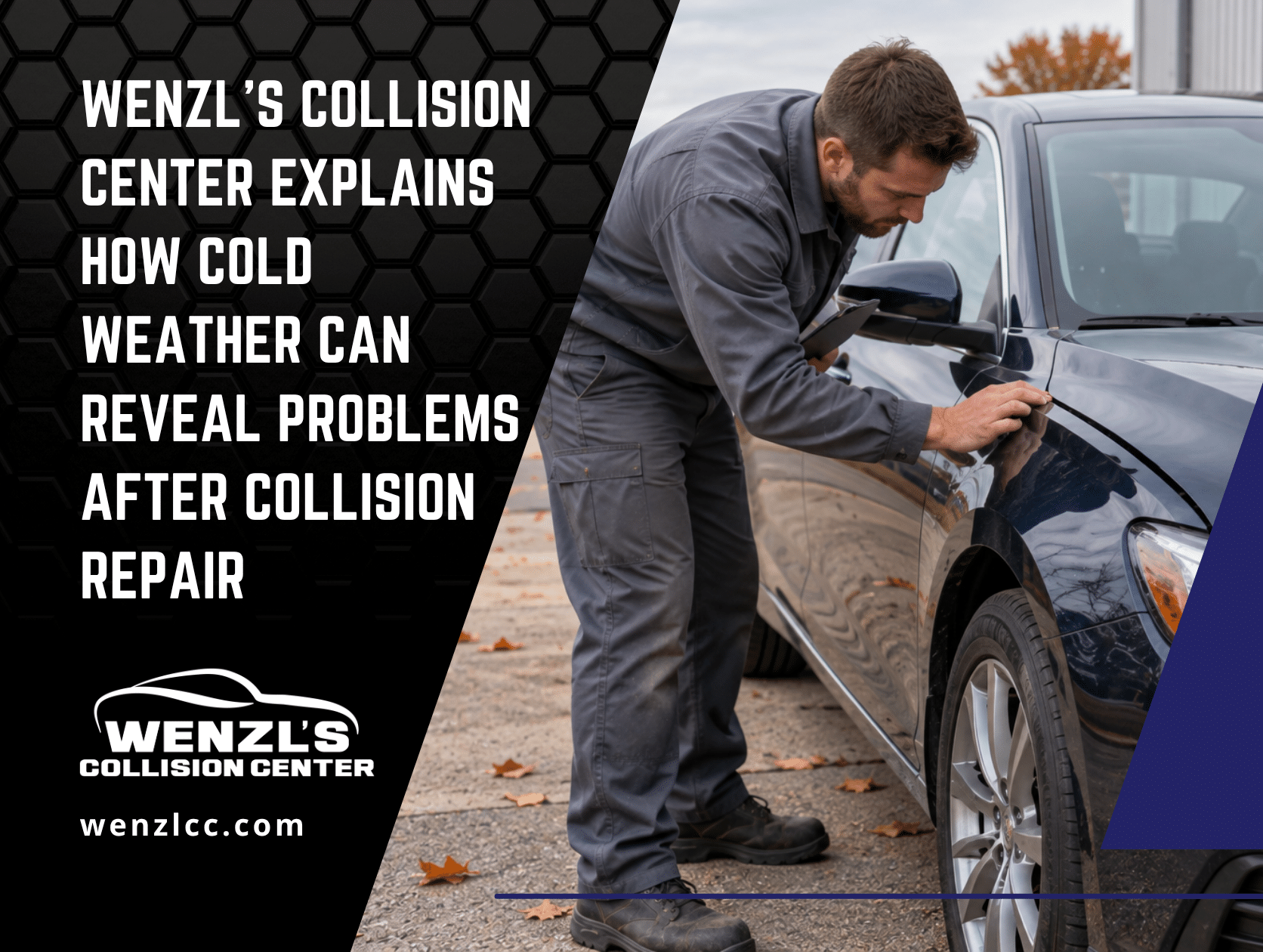
The resource is not intended to identify cold weather as a cause of repair problems. Instead, it gives drivers a structured way to document changes around previously repaired areas and distinguish an observation from a diagnosis.
The first category is fit and closure. Collision repair can involve doors, hoods, liftgates, bumpers, fenders, quarter panels, and adjoining trim. These areas combine components made from different materials and rely on specific attachment and alignment relationships.
As temperatures fall, changes in the behavior of plastic, rubber, metal, and related materials can affect how some components look, feel, or operate. A driver who notices a new difference around a repaired panel can document where the change occurs and whether it remains consistent under different conditions.
Wenzl’s auto body repair information provides additional context about exterior panel and component restoration following collision damage.
The second category is sealing. Doors, windows, trunks, and liftgates use weatherstripping and adjoining surfaces to manage exposure to air, water, and outside debris. Lower temperatures can affect the flexibility of rubber components, making changes around an opening easier to notice.
Wind noise, moisture, or a difference in how an opening closes can provide information worth documenting, particularly when it occurs near a previously repaired area. Evaluation of the actual component is necessary to distinguish a repair-related condition from normal material behavior, wear, contamination, or another cause.
Sound is the third category. Temperature changes can alter the flexibility and interaction of trim, seals, plastics, and other vehicle materials. As a result, drivers may become aware of rattles, squeaks, or other sounds that were not as apparent under warmer conditions.
The October guidance recommends focusing on the characteristics of the sound rather than assuming its source. Its location, the driving conditions under which it occurs, and whether it originates near a repaired area can provide useful information during an evaluation.
The fourth category is vehicle operation. Seasonal driving can make drivers more attentive to steering behavior, wheel-related changes, exterior lighting, warning indicators, and other operating characteristics.
When an earlier collision involved a wheel, suspension area, body opening, exterior lamp, or another relevant component, a newly observed change can be documented and evaluated in relation to that area. Inspection, measurement, or diagnostic information can then help determine whether the condition has any connection to the previous repair.
This approach is also relevant to modern vehicle electronics. Cameras, sensors, wiring, lighting, and other electronic equipment can be located in areas commonly involved in collisions. If an indicator or electronic condition appears after temperatures change, evaluation can account for the vehicle’s equipment, diagnostic information, and applicable vehicle-specific procedures.
The new element of the October publication is its four-part observation framework. Rather than presenting a broad list of possible cold-weather symptoms, the resource organizes post-repair observations according to what the driver can directly identify: a change in fit or closure, sealing behavior, sound, or vehicle operation.
The framework also establishes a boundary between observation and cause. Seasonal changes can provide circumstances in which a condition becomes more apparent, but identifying the reason for that condition requires evaluation of the specific vehicle and affected area.
For drivers, documenting when the condition first became noticeable, where it occurs, and the circumstances in which it appears can provide more useful information than attempting to determine the cause independently.
Information about Wenzl’s facility is available through its Lincoln location resource.
The October guidance provides a seasonal method for monitoring a vehicle after collision repair without treating every cold-weather change as evidence of a repair concern. Fit and closure, sealing, sound, and vehicle operation give drivers four specific categories for documenting what they observe before the individual condition is evaluated.
Wenzl’s Collision Center is a family-owned collision repair business serving Lincoln, Nebraska. Located at 4515 N 62nd St, Lincoln, NE, the facility provides collision repair, auto body repair, paintless dent repair, and related vehicle restoration services for drivers in Lincoln and surrounding communities.
###
For more information about Wenzl’s Collision Center, contact the company here:
Wenzl’s Collision Center
Kelli & Martin Wenzl
(402) 466 0821
kwenzl@wenzlcc.com
4515 N 62nd St, Lincoln, NE 68507


