
Hopkins, MN – October 14, 2026 – PRESSADVANTAGE –
Hopkins Auto Body 1 is publishing consumer guidance that explains four parts categories drivers may encounter on a collision repair estimate: repairable original components, original equipment manufacturer parts, aftermarket parts, and recycled original equipment components. The October resource is designed to help vehicle owners understand what those terms mean and which factors can influence the parts listed in a repair plan.
The guidance emphasizes that parts selection begins with a different question: whether the damaged component needs replacement at all. Some collision-damaged parts can be repaired, while others require replacement based on their condition, material, damage location, accessibility, and applicable repair procedures.
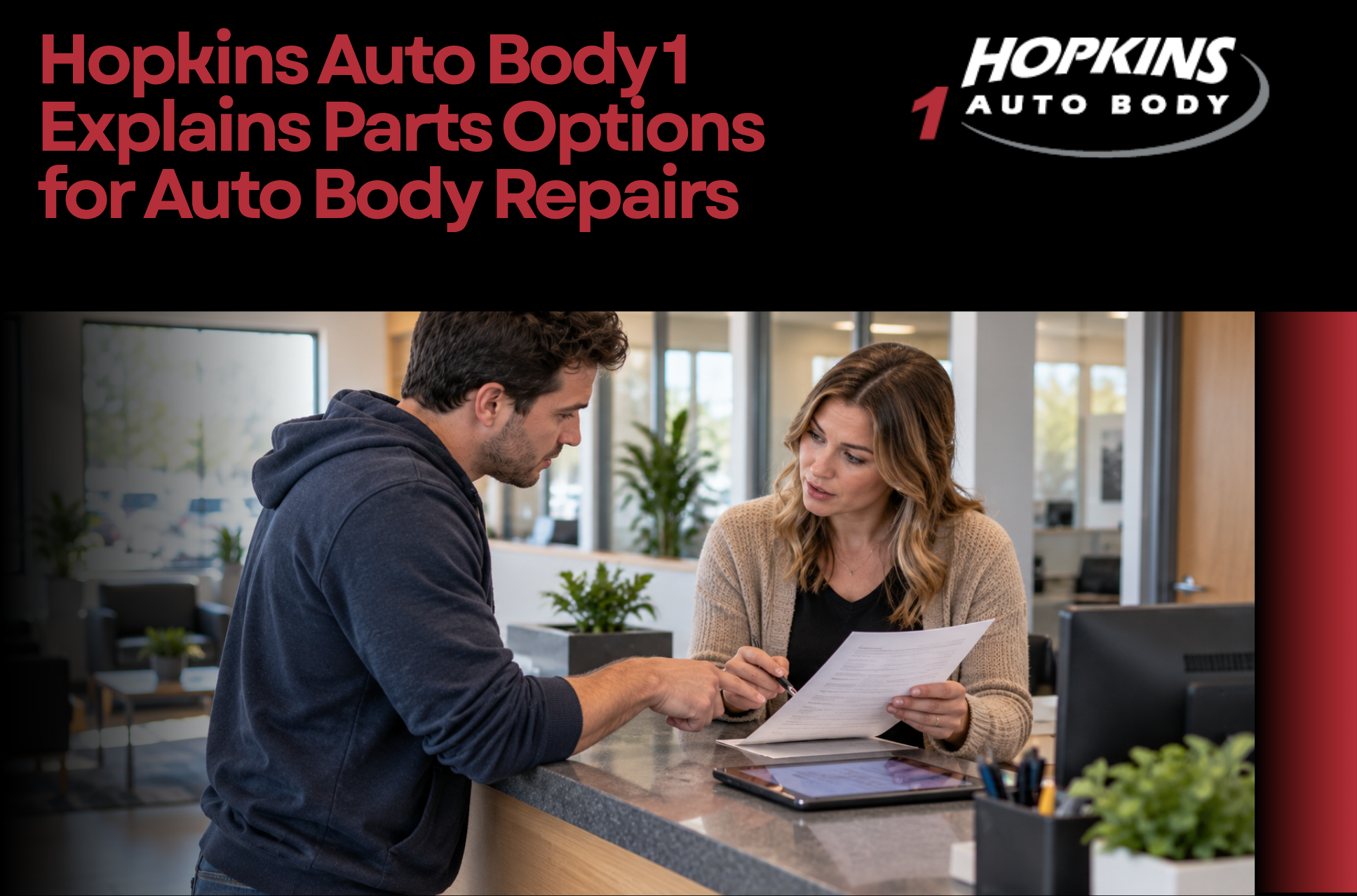
Hopkins Auto Body 1 operates as part of Collision Center 1 and serves as its local Hopkins repair facility. Information about the shop is available through the Hopkins Auto Body 1 location page.
When replacement is required, an OEM part may be one option. OEM components are produced for the vehicle manufacturer or supplied through its parts system for a particular application. For consumers, the term primarily identifies the source and intended vehicle application of the component.
Another category is an aftermarket part, which is produced outside the vehicle manufacturer’s original parts distribution system. Availability varies by vehicle, model year, and component. The presence of an aftermarket option does not by itself determine whether that part will be used for a specific repair.
Recycled original equipment components represent a third replacement category. These are previously used OEM components removed from another vehicle and made available for reuse. When this type of component is considered, its individual condition matters. Existing damage, corrosion, previous repairs, or other conditions can affect whether the part is appropriate for the intended repair.
The fourth possibility is retaining and repairing the vehicle’s existing component. Collision damage does not automatically require replacement. A repairable panel or bumper cover, for example, may remain on the vehicle when its condition and applicable procedures support that approach.
These four categories provide the central framework of the October guidance. Rather than presenting one parts category as universally preferable, the resource encourages consumers to understand what is listed on the estimate and why it applies to the particular repair.
Parts decisions can also affect other stages of auto body repair. A replacement fender, hood, door, bumper cover, or other exterior component may require preparation and refinishing before it visually integrates with the surrounding vehicle.
Installation can involve more than the primary replacement component. A door may interact with hinges, latches, handles, glass, wiring, mirrors, trim, and weather seals. A bumper assembly can include brackets, retainers, reinforcement components, lamps, sensors, wiring, and other equipment.
Modern vehicle technology can add further considerations. Cameras, radar equipment, parking sensors, wiring, and other electronic components may be positioned in or near collision-prone areas. When repair work affects these systems, applicable manufacturer procedures can help determine whether additional removal, installation, diagnostic, positioning, or calibration operations are required.
Not every replacement part affects driver-assistance technology, and replacing a component does not automatically require calibration. The applicable procedures depend on the vehicle, equipment, affected area, and repair operations being performed.
Material construction can also influence the repair-versus-replacement decision. Modern vehicles can contain steel, high-strength steel, aluminum, plastics, composites, and other materials. Different materials can have different repair limitations and procedures, making component identification relevant before a repair method is selected.
Insurance involvement can add another factor to parts planning. When an insurer is involved, parts listed on an estimate can reflect policy provisions, estimating guidelines, availability, and the circumstances of the claim. The repair facility evaluates the damaged vehicle and the operations needed for the repair, and differences may require additional communication or documentation as the repair plan develops.
Parts availability can affect timing as well. A component appropriate for the repair still has to be sourced, and availability can vary by vehicle, model year, supplier, and current inventory.
The broader collision repair process connects parts decisions with damage analysis, body repair, refinishing, reassembly, and final review. This is why the price or category of a replacement component does not describe the entire repair associated with installing it.
For drivers reviewing an estimate, the October guidance reduces the parts discussion to four practical questions: whether the original component can be repaired, what type of replacement part is listed if replacement is necessary, whether the selected component affects other repair procedures, and whether availability could influence scheduling.
The central takeaway is that terms such as OEM, aftermarket, recycled, and repairable original describe different options within a larger repair plan. The appropriate choice depends on the specific component, its documented condition, applicable procedures, and the circumstances of the individual repair.
Hopkins Auto Body 1 is located at 10889 Excelsior Blvd, Hopkins, MN 55343. The facility operates as part of Collision Center 1 and provides auto body and collision repair services for Hopkins-area drivers.
###
For more information about Hopkins Auto Body 1, contact the company here:
Hopkins Auto Body 1
Jerald Stiele
(952) 935-7556
kburke@collisioncenter1.com
10889 Excelsior Blvd, Hopkins, MN 55343


