
Originally Posted On: https://travelandtourtips.com/why-july-and-august-define-every-serious-alaska-bear-tour-decision/
The Bottom Line
If seeing bears is the whole point of your trip, book July or August — period. Salmon runs pull bears into concentrated feeding spots during those two months, and no amount of guide skill or boat quality makes up for showing up when the fish (and the bears) simply aren’t there yet.
-
Peak weeks mean more bears in fewer, more predictable places.
-
Shoulder season trades sightings for quieter trails — a fair trade only if solitude matters more to you than bears.
-
Cruise passengers with a fixed port window benefit most from peak timing since there’s no chasing a better date later.
Book an Alaska bear tour in June, and you might spend three hours staring at empty gravel bars. Book the same trip six weeks later, and bears practically line the riverbank. That’s not luck — it’s biology, and it’s the single biggest variable most trip planners get wrong.
Guides who’ve spent years reading tides, salmon counts, and bear behavior will tell you the same thing: the boat matters less than the calendar. The captain’s skill, the vessel’s stability, even the destination itself — none of it compensates for showing up during the wrong window. Brown bears don’t gather at falls and river mouths because it’s pretty. They gather because sockeye and pink salmon are pushing upstream in numbers, and that push has a schedule of its own.
Here’s what most people miss: a trip planned around convenience — a cheaper flight, a quieter month, an open weekend — often ignores the one factor that actually determines whether you see anything worth photographing. And for travelers with a single shot at this (cruise passengers with a few hours in port, families who saved for years to make this trip happen), that gamble is a rough one to lose.
So let’s settle it plainly. If sightings are the goal, two months carry the weight. Everything else is negotiable.
The Thesis: Timing Beats Everything Else When Planning A Bear Tour
Picture two travelers booking the same week: one flies in during late June, hikes a riverbank, and sees a single distant bear digging for roots. The other arrives three weeks later, in late July, and watches four brown bears fishing salmon in broad daylight, close enough to hear the splash. Same operator. Same boat. Same guide. The only difference was the calendar.
That’s the argument here, and it’s not a soft one: month choice matters more than boat choice, more than which guide you book, and honestly more than which destination you pick. Bears don’t show up because a company advertises well — they show up because fish are running. The salmon calendar drives everything. Once the runs hit their peak, bears abandon their scattered spring foraging and cluster along known feeding water, which is exactly when a well-timed Alaska bear tour pays off.
The rest of this piece backs that claim with specifics: when runs peak, why an Anan Wildlife Tour only operates certain months, and how population density at feeding sites shifts week to week. Get the timing right, and the rest falls into place.
Why Salmon Runs Make July And August The Peak Viewing Window
Bears don’t show up on a schedule — they show up when the fish do. That’s the whole equation behind any serious Alaska bear tour, and it’s why guides push clients toward mid-summer dates instead of early June.
How Brooks Falls Bear Viewing Lines Up With The Sockeye Run
Brown bears cluster at falls and river mouths once sockeye push upstream in force, usually starting in early July and peaking through August. Fish stacked below a falls means bears don’t need to wander — they just wait. Early-season visitors, by contrast, often see fewer bears and need more patience; the run hasn’t built yet, and bears are still scattered across the hills grazing on sedges.
What Happens To Bear Behavior In Southeast Rivers During Late Summer
Earlier in the season, bears forage in the open — tide flats, meadows, whatever’s available. Once salmon crowd the river mouths in late summer, that behavior flips. Bears park themselves at pinch points, feeding for hours, barely moving. That’s exactly why a properly timed Alaska bear guided tour in late July or August produces stronger, longer sightings than a spring trip ever could. Operators running Alaska bear viewing tours plan their calendars around this exact window for good reason — it’s when the odds stop being a gamble.
The Population Argument: More Bears Concentrate In Fewer Places
Ever wonder why guides get twitchy when someone asks about a June trip? Salmon runs peak in July and August, and that’s when brown bears stack up along rivers and falls in numbers that just don’t happen earlier in the season. In June, bears are still spread out foraging on grass and early berries — sightings happen, but they’re scattered and less predictable.
Black bears follow a similar rhythm but shift slightly later, often peaking in late July into August depending on local runs. That offset matters if you’re trying to plan around both species in one trip.
Here’s the blunt truth: if sightings are the whole point, booking outside this window is a gamble most people don’t need to take. Reputable Alaska guided bear tours build their entire summer schedule around this exact window for good reason — it’s when the odds tip hard in your favor. Anyone comparing Bear viewing tours Alaska wide should weigh this population math before locking in dates.
Addressing The Counterargument: Isn’t Early Or Late Season Better For Fewer Crowds?
Here’s a number worth sitting with: platform capacity at popular viewing sites drops by roughly half outside the July-August window, and that’s not an accident — fewer bears show up, so operators scale back. Shoulder-season advocates aren’t wrong about everything. May trips often mean thinner crowds, occasionally lighter costs, and none of the permit shuffling that comes with peak-season platforms.
But fewer people usually means fewer bears too.
Salmon haven’t arrived in volume yet, so the animals are scattered, foraging on early vegetation instead of gathering at falls or river mouths. Weather in shoulder months swings harder — more rain, more fog, more days where boats sit tied up instead of running. For someone with a single afternoon carved out of a bucket-list trip, that’s a real gamble.
So which trade-off actually fits?
Anyone chasing solitude over guaranteed sightings might genuinely prefer April or September. That’s a legitimate, different goal. But for travelers building their entire Alaska bear tours and viewing plans around one shot at seeing brown bears up close, peak season wins. A well-run anan bear tour during July or August simply stacks the odds in your favor — and that’s the whole point.
What The Data Says About Odds Of Seeing A Bear In Alaska By Month
Here’s a myth worth busting: more people on a boat doesn’t mean better odds. What actually moves the needle is salmon timing, not tour size or boat horsepower. Guides who track years of trips will tell you the same thing — the calendar matters more than almost anything else you can control.
Rough breakdown, based on years of guide observation:
-
June: Bears are around but scattered, feeding on green vegetation and early runs. Sighting reliability sits low-to-moderate.
-
July: Salmon push into rivers and creeks; bears concentrate near falls and streams. This is peak reliability for any Bear tour in Alaska.
-
August: Still excellent — arguably the best month overall, with bears fattening up before fall.
-
September: Numbers thin out as bears disperse and some head toward denning areas.
But here’s the thing — even in peak weeks, weather and water levels still swing results. Heavy rain can blow out river height and scatter fish, which scatters bears with them. A guide watching river conditions on a system like the Stikine will reroute or delay based on what the water’s doing that morning, not what the calendar says it should be doing.
Why This Timing Argument Matters More For Cruise Passengers With A Fixed Port Window
Picture this: a ship docks at 8 a.m. and pulls out at 3 p.m., and somewhere in that window a family wants bears, whales, and a decent lunch. There’s no room to wait out a slow week or rebook for better weather. That’s the reality for most ship visitors weighing an Alaska bear tour against everything else on the port list.
How A Tight All-Aboard Schedule Changes The Calculus
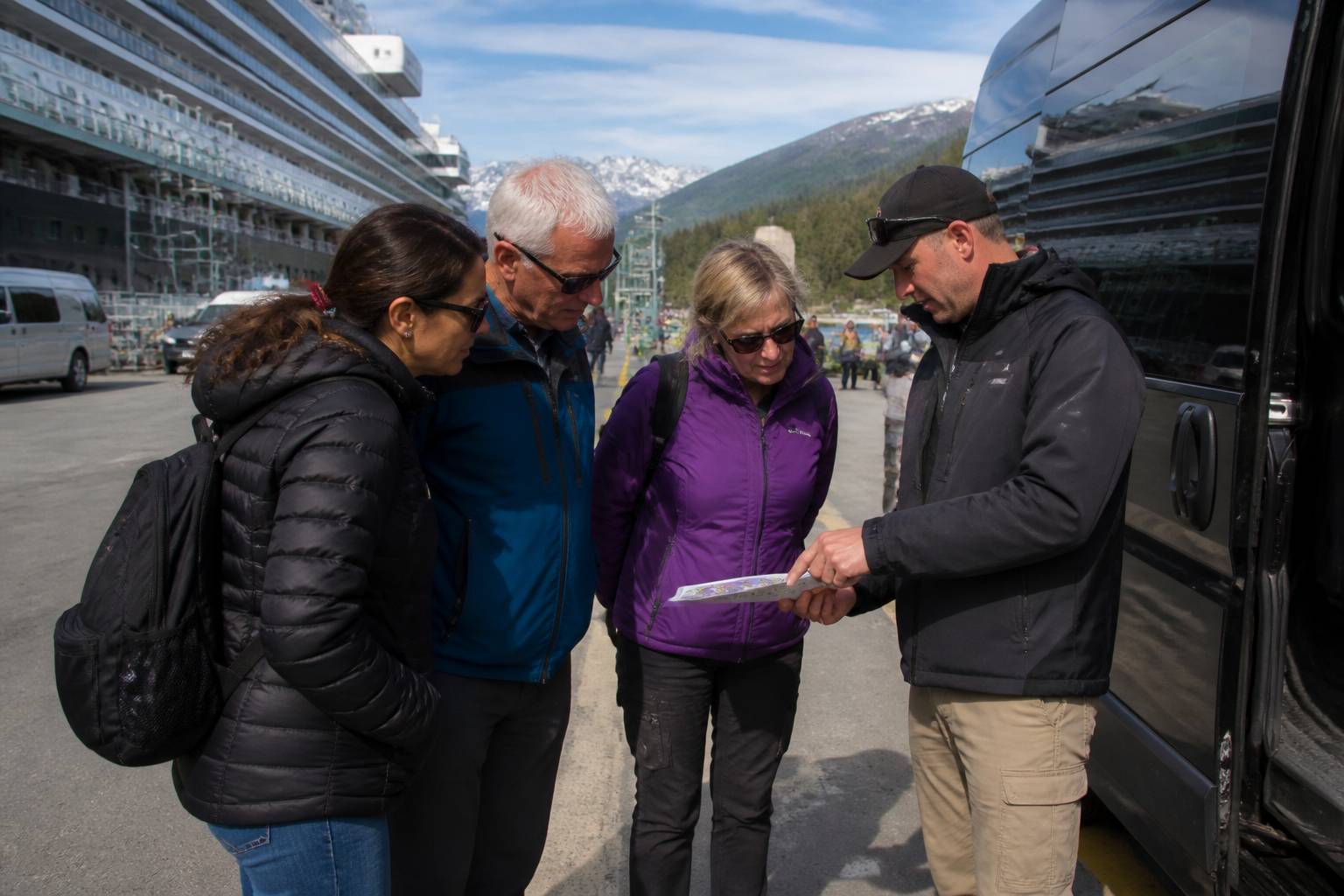
Cruise passengers can’t chase a better month — they get the days they’re handed. That’s exactly why the captain’s daily read matters more than any calendar. A locally guided coastal wildlife trip run by an experienced skipper adjusts its route based on recent sightings, tide movement, and where animals fed the day before, rather than sticking to a fixed loop drawn on a brochure map.
Planning A Half-Day Or Few-Hour Trip Around Peak Season Realities
Here’s what most people miss: a 3.5 to 6-hour outing during July and August still delivers strong odds without demanding a multi-day commitment. Peak salmon runs pull bears down to the water on a predictable schedule, so short trips punch above their weight. For guests who want close, controlled viewing rather than a hopeful scan of the shoreline, an Alaska bear safari built around an observatory platform offers exactly that during the narrow peak weeks.
Comparing Bear Viewing Regions: Coastal Wilderness Versus Lodge-Based Platforms
Boat-Based Coastal Trips Versus Fly-In Lodge Experiences
Getting to the bears shouldn’t cost you a full travel day.
That’s the blunt truth most fly-in operators won’t lead with. A remote lodge platform sounds glamorous, but it usually means a floatplane leg, a weather hold, and a rigid schedule built around someone else’s flight roster. A boat-based route skips that entirely — you load up, run the coast, and you’re in bear country while the lodge crowd is still waiting on a runway.
During peak weeks, salmon runs pull bears to the same creek mouths whether you arrived by air or by water. The payoff is identical: brown bears fishing, cubs shadowing sows, eagles working the same banks. What differs is the logistics stack — fewer legs, fewer delays, and a guide who knows the tide table cold. For travelers weighing a coastal option, an Anan Bears Viewing trip delivers that dense-population payoff without the extra connection.
What A Guided Observatory Setting Adds During Peak Weeks
Structured platforms matter most when bear density peaks. Trail limits keep foot traffic predictable, which keeps bears calm and guests safe. Guides carrying bear spray and rifles aren’t there for show — they’re trained to read behavior and move groups before tension builds. That kind of managed access beats improvised viewing every time.
The Safety Case For Booking During Established Peak Weeks
Would you rather have a guide who’s read bear behavior a hundred times this season, or one who’s seeing it for the third time all year? That’s the real question behind timing an Alaska bear tour. During peak weeks, competition over salmon runs high — bears crowd the same stretches of water, cubs tag along with mothers on edge, and the margin for guide error shrinks fast. Operators who work these weeks constantly build instincts that off-season crews simply don’t get the reps to develop.
That’s exactly why solid Guided Alaska bear viewing outfits treat certain rules as non-negotiable, not optional extras. Expect trained guides carrying bear spray, strict no-food policies on the trail, and firm directions about staying grouped and quiet. These aren’t formalities — they’re standard practice because feeding competition during high-density weeks makes bear reactions less predictable.
It’s also why most reputable operators set age minimums during these stretches. Infants and toddlers make sounds and smells that can trigger unpredictable responses in a mother bear guarding cubs near a crowded fishing hole. A five-year cutoff isn’t arbitrary — it’s a line drawn from decades of watching how bears react when stress runs high. Guides who work peak weeks year after year know exactly where that line needs to sit.
Final Case: Why Waiting For July Or August Beats Chasing A Cheaper Or Quieter Alternative
Roughly 90% of the salmon-run window that pulls bears into shallow water falls inside just eight weeks. That’s the number that should end the debate. An Alaska bear tour booked outside that stretch is a gamble; booked inside it, it’s close to a sure thing.
Shoulder-season trips aren’t worthless — they’re just answering a different question. A May or September trip might suit travelers chasing quiet trails, lower crowds, or a broader wildlife mix that isn’t bear-specific. Fine goals. Just not the same goal as watching brown bears work a salmon run at close range.
But if the bucket-list moment is bears — real ones, close, feeding, unbothered by the boat — the math doesn’t change. Guides don’t control salmon timing. Nobody does. That’s exactly why a guided option like the Anan Bears Expedition lists availability only for July and August in the first place. It’s not a marketing choice. It’s biology.
So here’s the practical takeaway: pick the goal first, then the month. And if the goal is bears, lock in a peak-season date now. Cabins, boats, and small-group slots fill fast once July arrives, and waiting until spring to plan often means settling for whatever’s left.
Here’s the plain truth after all of this: the calendar runs the show. A guide can read tides, position a boat, and spot a bear from half a mile out — but none of that manufactures salmon that aren’t there yet. Bears go where the fish are, and in July and August, that’s concentrated feeding in a handful of predictable spots. Book outside that window and you’re gambling on scattered, hungry bears still working the shoreline instead of gathered at the falls.
Shoulder-season travel has its place.
Quieter docks, thinner crowds, a slower pace — fine goals, just not the same goal as watching a sow teach cubs to fish six feet away. If sightings are the point, don’t split the difference.
Anyone serious about booking an Alaska bear tour should treat peak weeks like the limited resource they are. Reach out to a local operator now, ask about July and August openings, and lock a date before the good slots vanish. That’s the whole decision, really. Everything else is just details.


