
Key Takeaways
- Businesses switching to LED lighting can reduce energy consumption by up to 83% compared to traditional incandescent bulbs.
- LEDs generate significantly less heat than traditional bulbs, producing only about a quarter of the heat of incandescent bulbs, which meaningfully lowers HVAC cooling costs — a second layer of savings most business owners overlook.
- Commercial LED fixtures can last up to 50,000 hours, dramatically cutting maintenance and replacement expenses over time.
- Ontario’s Save on Energy program offers incentives that can significantly offset eligible LED upgrade costs, with up to $3,000 available for small businesses with 50 or fewer employees.
- Burlington businesses that have completed full LED retrofits have reported over 80% energy savings and substantial annual cost reductions, with payback periods under one year.
Most business owners expect one benefit when they upgrade to LED lighting: a lower electricity bill. What surprises many is that the savings don’t stop there. LEDs also keep spaces cooler, cutting into what can be a significant summer cooling expense — especially across Ontario’s warmer months. That’s the double savings equation, and it’s quietly transforming how Burlington businesses think about their operating costs.
Burlington Businesses Are Saving 75%+ on Energy — Here’s How
The shift to LED lighting across commercial spaces isn’t a trend — it’s a financial strategy with measurable results. Businesses making the switch are consistently reporting energy savings of 75% or more on their lighting-related electricity consumption. Those aren’t optimistic estimates; they reflect what happens when power-hungry traditional bulbs are replaced with technology designed from the ground up for efficiency.
The math is straightforward. A standard 60-watt incandescent bulb produces a certain amount of visible light. A 10-watt LED delivers the same brightness — representing an energy reduction of up to 83%. Scale that across an entire commercial space with dozens or hundreds of fixtures, and the monthly savings become impossible to ignore.
ENERGY STAR reinforces this picture, noting that LEDs provide equivalent brightness to traditional bulbs while using up to 90% less energy and lasting 15 times longer. For property managers and business owners in Burlington managing tight operating budgets, that combination of lower consumption and extended lifespan creates compounding long-term value.
Why LEDs Deliver Two Bills’ Savings, Not One
The energy savings alone would be enough to justify an LED upgrade. But there’s a second financial benefit built into how LEDs actually work — and it shows up on a completely different line of the utility bill.
1. Energy Consumption Drops by Up to 83%
Traditional lighting draws far more electricity than it needs to produce visible light. Incandescent bulbs, fluorescent tubes, and HID fixtures all convert a significant portion of their consumed energy into heat rather than light — meaning businesses are paying for energy they’re never actually seeing. LEDs flip that equation. By drawing a fraction of the wattage for equivalent output, they directly slash the largest portion of any commercial lighting bill. A 10-watt LED replacing a 60-watt incandescent is an 83% reduction in draw per fixture. Multiply that across a retail floor, a warehouse, or an office building, and monthly savings climb quickly.
2. Less Heat Means Lower Cooling Costs
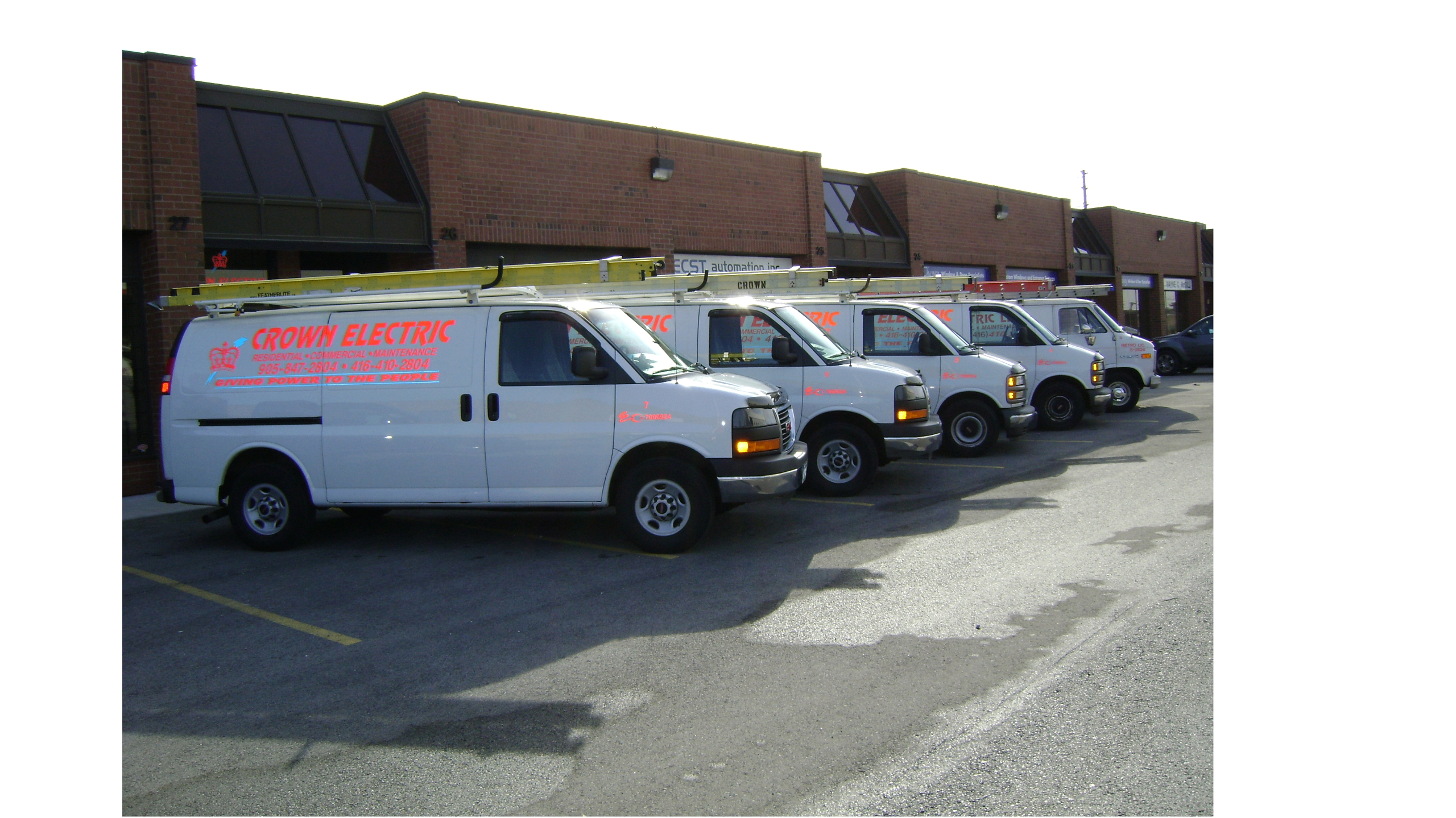
Here’s where the double savings concept becomes concrete. Every traditional bulb running inside a commercial space is also acting as a small heater. During Ontario’s warm summers, that added heat load forces HVAC systems to work harder — and run longer — to maintain comfortable temperatures. LEDs generate significantly less heat than traditional bulbs, producing only about a quarter of the heat of incandescent bulbs. The result is a measurable reduction in the cooling burden placed on air conditioning systems, which translates directly to lower hydro bills during the months when energy costs tend to peak. Crown Electric Ltd., a licensed Burlington electrician, highlights this exact dynamic as the core of the double savings model — and it’s a point that often catches business owners off guard when they see the numbers.
The Hidden Cost of Traditional Lighting
Before understanding why LEDs save so much, it helps to understand exactly what traditional lighting is costing businesses right now — beyond the obvious electricity draw.
Incandescent, Fluorescent, and HID Fixtures Waste Energy as Heat
Traditional lighting technologies are surprisingly inefficient at their core purpose: producing visible light. Incandescent bulbs convert roughly 90% of their consumed energy into heat, with only the remaining fraction becoming usable light. Fluorescent and HID (High-Intensity Discharge) fixtures are more efficient than incandescent bulbs but still convert a substantial portion of energy into heat rather than illumination. In a warehouse with hundreds of HID fixtures running eight or more hours a day, that inefficiency adds up to thousands of dollars annually — not just from the electricity they draw, but from the cooling required to compensate for the heat they generate. It’s a cost that doesn’t appear on a lighting invoice; it shows up on the HVAC bill instead, making it easy to miss in a standard cost review.
How Much Less Heat Do LEDs Actually Produce?
The difference is stark. While traditional technologies can convert up to 90% of their energy into ambient heat, LEDs are engineered to conduct heat away from the light source itself, preventing it from radiating into the surrounding environment. LEDs generate significantly less heat than traditional bulbs — producing only about a quarter of the heat output of a comparable incandescent. That’s not a minor improvement — it’s a fundamental change in how the technology interacts with a building’s thermal environment. For businesses running climate-controlled spaces, this reduction in heat load translates directly into fewer HVAC operating hours, lower cooling costs, and less wear on mechanical systems over time. The lighting upgrade, in effect, also becomes a partial HVAC upgrade.
Lifespan That Outlasts the Competition
Energy and cooling savings address the ongoing operational costs. But there’s a third financial lever that LED upgrades activate: dramatically reduced maintenance and replacement expenses.
Up to 50,000 Hours vs. Standard Bulb Life
Many commercial-grade LED fixtures carry a rated lifespan of up to 50,000 hours. To put that in perspective, a typical incandescent bulb lasts around 1,000 hours — meaning a single LED fixture can outlast roughly 50 incandescent replacements. Even compared to fluorescent tubes, which are rated for roughly 8,000 to 20,000 hours in most commercial applications — and up to 36,000 hours for certain types — LEDs offer a clear lifespan advantage. For a property manager overseeing a large facility, that’s a significant reduction in the labor and materials associated with regular bulb replacement. Fewer maintenance calls, fewer replacement parts to stock, and less disruption to daily operations. Over the full life of a commercial lighting installation, those savings accumulate into a meaningful reduction in total cost of ownership — one that doesn’t always appear in the initial ROI calculation but consistently shows up in the long-term budget.
Burlington Businesses Have Already Proved It Works
The double savings concept is compelling in theory, and real-world results from Burlington commercial properties confirm it holds up in practice. Businesses that have completed full LED retrofits across manufacturing, retail, and office environments have reported energy savings exceeding 80%, with annual cost reductions running into the hundreds of thousands of dollars for larger facilities. In several documented cases, the payback period on the full retrofit investment came in under one year — meaning the upgrade paid for itself before the next annual budget cycle.
These aren’t best-case projections. They reflect outcomes from businesses operating in the same Ontario climate, under the same hydro rates, and facing the same seasonal cooling demands as any other local commercial property. The underlying economics — rapid payback, substantial annual savings, and long-term compounding benefits — apply regardless of square footage. The percentage gains are what matter, and those hold across commercial applications of virtually any size.
Ontario Incentives Can Significantly Offset Upgrade Costs
One of the most practical reasons to move forward with an LED upgrade now is the availability of provincial financial support that directly offsets the upfront investment.
Save on Energy Rebates for Commercial Properties
Ontario’s Save on Energy program offers point-of-sale discounts and rebates specifically for LED retrofits in commercial properties. Eligible businesses can receive incentives that significantly offset qualifying project costs, making an upgrade that might otherwise appear out of reach far more accessible once available support is factored into the budget. These programs are designed to accelerate energy efficiency adoption across the province, and commercial lighting upgrades are among the most commonly supported project types. The rebate structure rewards businesses for taking action — meaning the longer an upgrade is delayed, the longer the full pre-incentive cost remains on the table.
Up to $3,000 for Small Businesses with 50 or Fewer Employees
For smaller operations, Ontario’s Small Business Program offers up to $3,000 in incentives specifically for lighting equipment upgrades, available to qualifying companies with 50 or fewer employees. This targeted support recognizes that small businesses often face the tightest capital constraints when considering efficiency investments — and it makes the financial case for LED upgrades especially strong for independent retailers, small manufacturers, and owner-operated commercial properties. Combined with the energy and cooling savings that begin immediately after installation, these incentives can bring the payback period down to a matter of months rather than years.
Crown Electric Turns Your Upgrade Into a Done Deal
Understanding the financial case for LED lighting is one thing. Getting the upgrade completed properly — safely, to code, and in a way that captures the full savings potential — is where the right electrical contractor makes all the difference.
Crown Electric Ltd. brings over 30 years of hands-on electrical experience serving Burlington and the surrounding area. As a family-owned, licensed commercial electrical contractor, the team handles lighting retrofits from initial consultation through to final installation, ensuring that every fixture is integrated correctly and that the work meets Ontario’s electrical safety standards. The process is straightforward: a consultation to assess the current setup, a written estimate based on the specifics of the space, and quality installation backed by a satisfaction guarantee.
For business owners working through the Save on Energy rebate process, partnering with an experienced local contractor also simplifies the paperwork and eligibility requirements — reducing the administrative burden that can sometimes slow down an otherwise straightforward upgrade. The goal isn’t just to swap bulbs. It’s to design a lighting system that maximizes the efficiency gains, integrates cleanly with existing infrastructure, and positions the business to benefit from every dollar of available incentive funding.
The double savings aren’t a marketing phrase — they’re the result of a well-executed upgrade by professionals who know exactly how to deliver them.
Learn more about what Crown Electric Ltd. offers Burlington businesses and property managers at https://crownelectricltd.ca/commercial-electrician-burlington/.
Crown Electric Ltd
2345 Wyecroft Rd Unit #27
Oakville
ON
L6L 6L8
Canada


