HUIZHOU, CHINA, June 17, 2026 /EINPresswire.com/ — For hardware engineers, procurement managers, and product designers, selecting the ideal tactile feedback mechanism involves a critical balancing act. Mechanical space constraints, power budgets, response latency, and operational lifespans are all variables that dictate project success. To source components from a High Quality Vibration Motor Factory, an engineering team must first evaluate technical tradeoffs through a rigorous vibration motor comparison. Micro-haptic options broadly fall into three core architectures: Eccentric Rotating Mass (ERM) motors, Linear Resonant Actuators (LRA), and Brushless DC (BLDC) motors. Each configuration features distinct mechanical drivers and control criteria, making them suitable for specific applications ranging from basic alerts to sophisticated high-fidelity haptic textures.
The Mechanical and Operational Core of ERM Motors
The Eccentric Rotating Mass (ERM motor) represents the most traditional and widely deployed tactile feedback architecture. Structurally, it consists of a DC motor that rotates an asymmetrical mass around an internal shaft. As the unbalanced weight spins, the centrifugal forces generate a multi-directional vibration that propagates through the surrounding enclosure.
ERM technology is available in multiple form factors, most notably cylindrical configurations and flat coin designs. From a design perspective, the primary appeal of an ERM motor is its operational simplicity. It operates directly on standard DC voltages, meaning it does not require specialized external driver integrated circuits (ICs) to generate haptic output.
However, the mechanical nature of the ERM introduces specific limitations in haptic performance:
Frequency-Amplitude Coupling: The vibration frequency and vibration amplitude are intrinsically tied to the input voltage. Increasing the voltage accelerates the shaft, which simultaneously raises both the frequency and the strength of the G-force. Designers cannot adjust these parameters independently.
Rise and Fall Latency: Because the internal mass must physically accelerate from a complete stop to its target RPM, ERM systems exhibit a noticeable lag (often between 80 to 120 milliseconds). A similar deceleration lag occurs when power is removed, resulting in a haptic sensation that can feel less crisp or slightly “mushy.”
Despite these limitations, the low cost and minimal circuit complexity make the ERM the go-to vibration motor for OEM applications where simple, cost-effective alerts are needed rather than complex haptic patterns.
Precision Control via Linear Resonant Actuators (LRA)
To overcome the latency and performance boundaries of traditional DC motors, contemporary product architecture frequently utilizes the Linear Resonant Actuator (LRA motor). Rather than utilizing a rotational mechanism, an LRA motor drives a magnetic mass suspended by springs along a single linear axis, moved via a internal voice coil.
This linear motion yields several distinct haptic advantages:
Rapid Response Times: LRAs feature significantly reduced rise and fall latencies (often under 20 to 30 milliseconds). This allows hardware engineers to design crisp, instantaneous haptic sensations like virtual button clicks or distinct keystroke pulses.
Decoupled Axis Performance: By focusing kinetic energy along a precise, defined plane, the haptic energy is channeled efficiently to the user’s fingertips, making it a highly effective mobile phone motor solution.
The operational caveat of the LRA lies in its dependency on resonance. The actuator must be driven at its specific resonant frequency (typically between 150 Hz and 230 Hz depending on the model) to produce meaningful G-force output. A deviation of even a few hertz from this resonant frequency drops the vibration amplitude significantly. Consequently, implementing an LRA requires a dedicated haptic driver IC capable of auto-resonance tracking to compensate for mechanical tolerances and temperature-induced frequency shifts.
For engineering teams looking for precise tactile feedback, sourcing high-performance components from a specialized LRA motor page ensures access to the strict tolerances required for advanced industrial, automotive, and smartphone interfaces.
High Performance and Extended Lifespan: Brushless DC (BLDC) Motors
When an application demands both miniature sizing and an exceptionally long operational lifespan, Brushless DC motors emerge as the premium tier of vibration components. Traditional coin and cylindrical motors rely on mechanical brushes to commutate internal windings. Over time, these brushes experience mechanical wear, friction, and electrical arcing, which limits the component’s lifetime.
A micro BLDC motor eliminates these mechanical failure points by using an electronic commutation sequence to switch the magnetic fields. The advantages of this design include:
Extended Operating Life: Standard brushed components may degrade after a few hundred thousand cycles, whereas a BLDC vibration motor can operate for millions of cycles without degradation.
Minimal Electrical Noise: The absence of physical brushes eliminates friction-induced electrical interference, which is critical for highly sensitive communication arrays or premium consumer electronics.
The electronic switching requires a specialized driver topology, but the payoff is a highly reliable component that delivers stable G-force output over the entire lifespan of the host device. For projects requiring long-term reliability, reviewing specialized technical specifications on a dedicated BLDC motor page allows engineers to evaluate the exact torque, power consumption, and mechanical footprints required for premium designs.
Technical Application Mapping and Comparative Framework
Selecting the optimal micro-vibrational architecture requires evaluating a complex set of parameters. Below is a structured engineering framework detailing the functional variations among the three primary motor topologies:
Tactical Application Mapping
Consumer Wearables & Smart Wristbands: These devices require tight space integration, power efficiency, and long lifespan. Micro BLDC systems and thin-profile coin ERMs are common here due to their compact footprints and reliable alert capabilities under varying thermal conditions.
High-End Mobile Devices: Achieving the status of the best vibration motor for phones demands fast response times to match user interface animations. The rapid rise times of LRAs allow them to render subtle textures, satisfying the tactile expectations of modern consumers.
Medical Devices and Industrial Tools: Applications that require rugged performance and distinct user alerts benefit from the high G-force output of heavy-duty ERMs or the high-reliability profiles of brushless systems.
Natural Integration of Production and Manufacturing Excellence
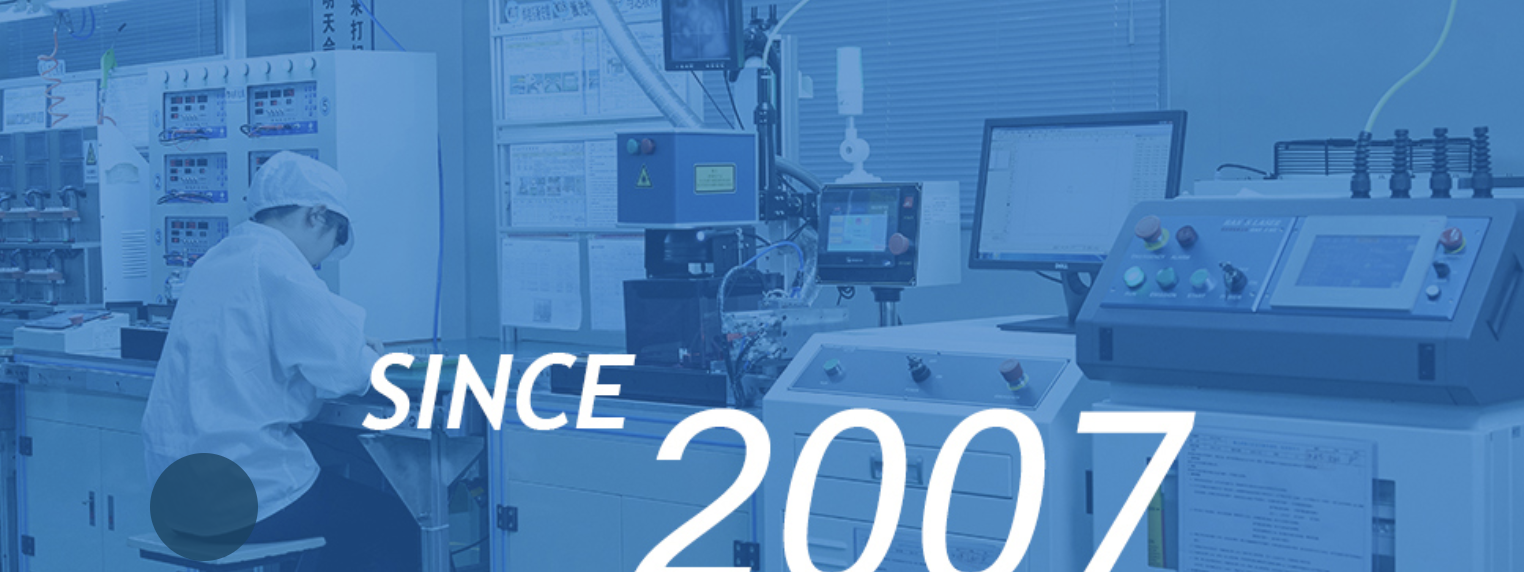
Translating these raw vibration motor specifications into reliable hardware requires a manufacturing partner capable of executing strict quality control at scale. Founded in 2007, LEADER Micro Electronics (Huizhou) Co., Ltd. has established an international presence as a high-tech enterprise specializing in the R&D, production, and distribution of micro vibration motors.
With an annual manufacturing capacity approaching 80 million units and cumulative global shipments nearing one billion components, LEADER supports large-scale OEM supply chains worldwide. The company’s production lines manufacture a comprehensive portfolio including coin motors, linear resonant actuators, brushless motors, and cylindrical configurations.
Maintaining low defect rates requires a robust quality management framework. LEADER operates under international standards, securing certifications including:
ISO9001:2015 International Quality Management System
ISO14001:2015 Environmental Management System
OHSAS18001:2011 Occupational Health and Safety Management System
Supported by an internal R&D division featuring engineers with up to 16 years of specialized micro-motor expertise, the facility handles everything from initial electrical validation to custom jig development and final assembly. Production quality is maintained through a rigorous 13-to-17 step inspection protocol, helping keep field failure rates below the 100 DPPM (Defective Parts Per Million) threshold.
Strategic Engineering Decisions
For product designers and procurement managers, navigating the tradeoffs between ERM, LRA, and BLDC architectures is vital to optimizing device performance. Balancing the low-cost simplicity of an ERM motor page solution against the crisp precision of an LRA or the longevity of a BLDC system ensures that the final product functions reliably and efficiently. By combining rigorous engineering analysis with an established manufacturing infrastructure, design teams can smoothly move their projects from initial prototyping to high-volume market success.
For comprehensive technical documentation, custom configuration requests, and product catalog details, please visit the official corporate portal: https://www.leader-w.com/
Leader Micro Electronics (Huizhou) Co., Ltd.
Leader Micro Electronics (Huizhou) Co., Ltd.
leader@leader-cn.cn
Legal Disclaimer:
EIN Presswire provides this news content “as is” without warranty of any kind. We do not accept any responsibility or liability
for the accuracy, content, images, videos, licenses, completeness, legality, or reliability of the information contained in this
article. If you have any complaints or copyright issues related to this article, kindly contact the author above.

Media gallery