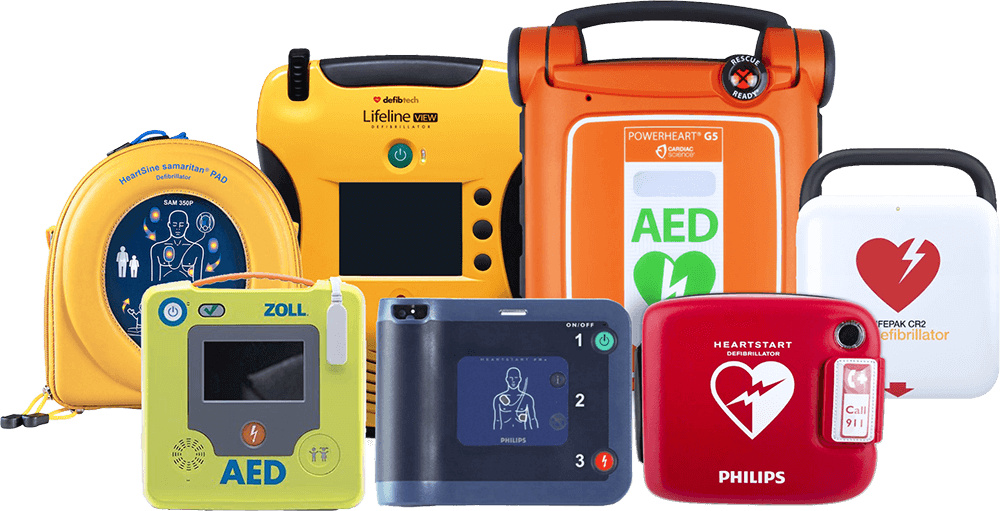
WINDSOR LOCKS, CT, UNITED STATES, June 15, 2026 /EINPresswire.com/ — A growing number of public school districts across the United States are re-evaluating who should be responsible for maintaining and managing their Automated External Defibrillator (AED) programs. Increasingly, districts are concluding that school nurses should focus on caring for students while AED maintenance, compliance, and readiness are handled by dedicated AED management professionals.
Historically, many schools assigned AED oversight to school nurses.
While nurses are highly qualified healthcare professionals, experts note that AED program management is fundamentally an equipment maintenance and compliance function requiring ongoing inspections, documentation, manufacturer recall monitoring, battery and electrode replacement tracking, warranty management, and regulatory oversight.
“School nurses are among the most valuable healthcare resources in any district,” said Douglas Comstock, Founder of AED Service America. “Their primary responsibility is ensuring the health and safety of students, not functioning as maintenance contractors responsible for tracking batteries, pads, recalls, warranties, and compliance documentation.”
The shift is being driven by several factors, including concerns about liability, resource allocation, and budgeting.
While Good Samaritan laws generally protect individuals who use an AED in good faith during an emergency, those protections typically do not extend to equipment maintenance failures.
If an AED fails to operate because of expired electrode pads, depleted batteries, unresolved recalls, or other preventable maintenance issues, questions may arise regarding whether reasonable care was exercised in maintaining the device.
Legal professionals note that liability often depends upon assigned responsibility. If AED maintenance is formally included in a nurse’s job duties, Emergency Action Plan, or district policy, that individual may have a duty to ensure the device remains operational or that deficiencies are properly reported. School districts themselves may also face liability if maintenance concerns are identified but corrective action is delayed or denied.
In addition to reducing administrative burden and potential liability exposure, professionally managed AED service plans offer significant budgeting advantages for school districts.
Many districts struggle with unpredictable spikes in expenses when multiple AED batteries or electrode pads expire during the same fiscal year. In some cases, budget limitations can delay replacement of critical components. A professionally managed AED service plan converts those irregular expenses into a predictable annual operating cost, allowing districts to budget more effectively while ensuring every AED remains response-ready.
“Many school districts are discovering that AED management is not just a safety issue—it’s also a budgeting issue,” Comstock added. “A fixed annual service plan helps eliminate surprise expenses, allows schools to forecast costs accurately, and ensures that critical maintenance is never postponed because replacement parts were not anticipated in the budget.”
According to AED Service America, manufacturer audits and inspections conducted over the past decade have revealed that nearly every AED deployment reviewed contained at least one issue involving maintenance, compliance, recalls, warranties, end-of-life equipment, or readiness concerns requiring corrective action.
As a result, many districts are transitioning AED oversight to specialized AED management providers who maintain inspection records, monitor manufacturer notifications, coordinate consumable replacements, provide compliance reporting, and help ensure devices remain ready for use during a sudden cardiac arrest emergency.
With sudden cardiac arrest remaining one of the leading causes of death on school campuses among adults and a growing concern for student-athletes, school administrators, risk managers, and boards of education are increasingly viewing professional AED program management as a risk-reduction strategy that protects students, supports nurses, and provides greater financial predictability.
“The goal is simple,” said Comstock. “Allow nurses to focus on caring for students while trained AED professionals focus on ensuring every AED is ready to perform when a life is on the line.”
About AED Service America
AED Service America is a nationwide provider of AED program management services specializing exclusively in AED maintenance, compliance, inspections, manufacturer audits, training support, and regulatory documentation. The company serves schools, universities, healthcare organizations, municipalities, and businesses throughout the United States with a mission of ensuring AED readiness at the point of rescue.
Media Contact:
Douglas Comstock
Director
AED Service America
Doug Comstock
AED Service America
+1 860-970-3250
email us here
Legal Disclaimer:
EIN Presswire provides this news content “as is” without warranty of any kind. We do not accept any responsibility or liability
for the accuracy, content, images, videos, licenses, completeness, legality, or reliability of the information contained in this
article. If you have any complaints or copyright issues related to this article, kindly contact the author above.

Media gallery